Restaurant Labour Cost Control: Why Labour Blows Out
(and how to fix it)

Labour is one of the fastest ways a profitable venue becomes an unprofitable one.
One week it looks fine.
The next, it’s blown out with no clear reason why.
And most operators don’t actually know what caused it.
If you want to understand how this actually works in practice, see how labour control is built into the wider system.
What’s actually happening behind your labour costs
What looks like a labour problem is usually a visibility and structure problem.
Labour doesn’t usually blow out overnight.
It drifts.
Slowly, quietly, and often without anyone noticing early enough.
Shifts run a bit longer than they should.
Rosters aren’t built around actual demand.
Extra hours get added “just to be safe.”
And over time, those small decisions compound.

Why most attempts to fix labour don’t work
When labour starts creeping up, most operators react quickly.
They cut shifts.
Send staff home early.
Or try to run leaner rosters.
But these fixes are reactive.
They don’t address the real issue, which is a lack of structure around how labour is planned, tracked, and controlled.
So the same problem comes back week after week.
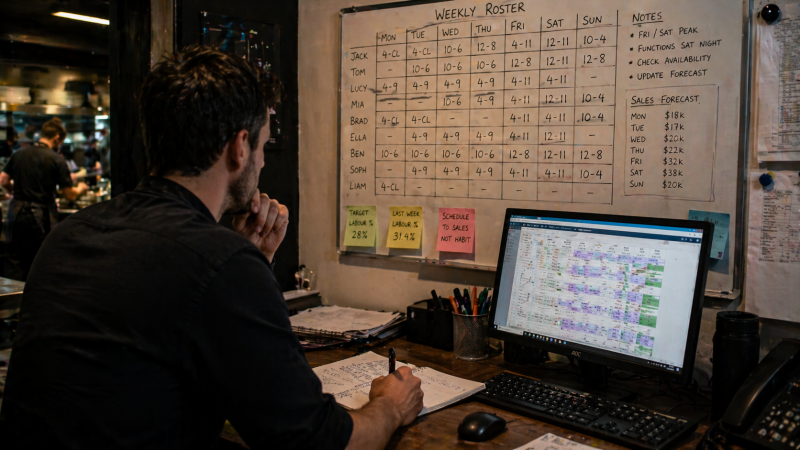
Labour cost is not just about hours worked
Labour isn’t just a number on a report.
It’s the result of how your operation is structured.
If your service has no clear rhythm…
If your team doesn’t know what “right staffing” actually looks like…
If there’s no connection between sales and roster decisions…
Labour will always feel unpredictable.
What actually fixes labour control
The venues that control labour consistently don’t rely on guesswork.
They build structure into how shifts are planned and run.
They understand:
- What their labour should look like at different sales levels
- How to roster based on demand, not habit
- Where time is being lost during service
Once that structure is in place, labour becomes predictable and controllable.
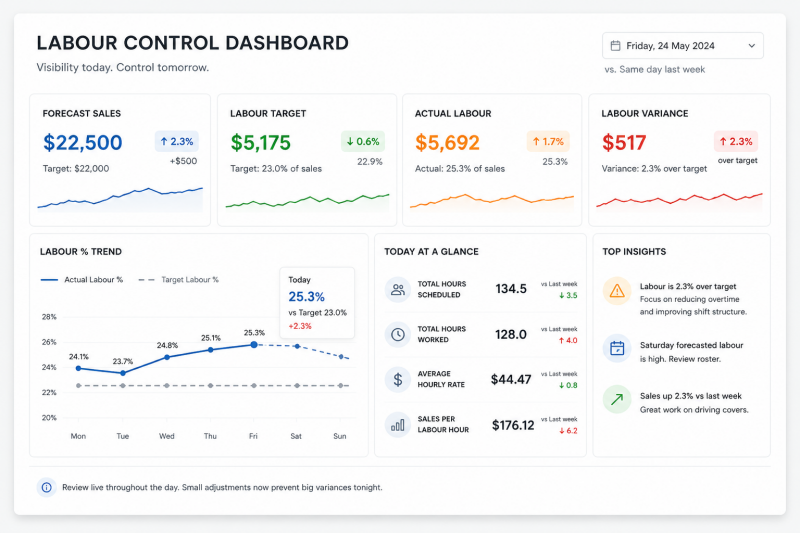
Control starts when the numbers are visible before the damage is done.
Building real control into your venue
This is exactly what most venues are missing.
Not effort.
Not good people.
Structure.
The Venue Operations Framework was built to give you that structure, so you can actually see what’s going on in your venue and fix it properly.

This is where most venues get stuck
Not because they don’t care.
Not because they’re not working hard.
But because there’s no clear system for how labour is planned, tracked, and controlled.
That’s exactly what the Venue Operations Framework gives you.
A practical structure you can apply in your own venue.
So you can see what’s actually happening,
make the right calls on labour,
and stop running on guesswork.

Apply it in your venue. See what’s actually driving your numbers. Fix it properly.
What’s inside the Venue Operations Framework
Everything is built to help you see why labour is drifting, understand where time is being lost, and bring structure back to your roster and service.

Framework
The core operating system for understanding how labour connects to service flow, leadership, forecasting, menu pressure, and commercial control.

8 Video Modules
Self-paced training that walks you through the key disciplines of venue control, including labour forecasting, real-time labour management, service structure, and manager visibility.

Workbook
Practical exercises to help you assess how labour is planned, where hours are being lost, and what needs to change inside your own venue.

Toolkit
Ready-to-use tools for daily service planning, manager control, weekly labour review, team standards, and operational consistency.
See where labour is drifting. Tighten the structure. Run service with more control.
Create Your Own Website With Webador